
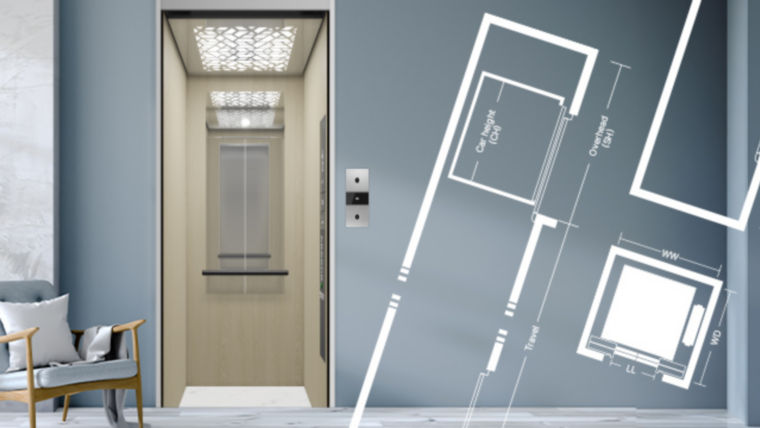
As residential homes become larger and more multi-storey, homeowners are increasingly considering home lift solutions to support accessibility, convenience, and future-proof living.
For architects and builders, integrating a residential lift early in the design process can significantly improve both functionality and spatial efficiency.
Here are five key considerations when planning a residential lift solution.
1. Plan for Lift Integration Early
Incorporating a home lift early in the architectural planning stage helps ensure smoother integration within the home's layout.
Early consideration can help address:
- circulation and vertical access
- shaft placement
- structural coordination
- spatial efficiency
When lift planning happens late in a project, it can introduce design constraints or require structural adjustments. KONE MonoSpace Home® makes early integration even more seamless.
2. Consider Space and Footprint
Residential lifts are designed to fit within private homes, but space allocation still plays an important role.
Architects should consider:
- shaft dimensions
- landing placement
- door orientation
- accessibility requirements
Solutions like KONE MonoSpace Home® are designed with a compact footprint, making them easier to integrate into residential layouts.
3. Design for Accessibility and Future Living
Many homeowners are thinking long-term when designing their homes.
Home lift solutions can support:
- ageing-in-place planning
- accessibility for family members
- improved convenience between levels
- long-term property value
Designing with accessibility in mind ensures homes remain functional for years to come.
4. Think About Aesthetic Integration
A residential lift should complement the home’s design rather than disrupt it.
Architects often consider:
- interior finishes
- lighting integration
- door styles
- overall visual harmony with the home
Modern residential lift solutions offer design flexibility to integrate seamlessly with contemporary home interiors.
5. Consider Long-Term Maintenance and Support
Beyond installation, ongoing reliability is essential.
Homeowners benefit from lift systems supported by:
- professional installation
- scheduled servicing
- long-term maintenance support
Choosing a solution backed by an experienced service provider ensures the lift continues to perform safely and efficiently.
Bringing Lift Planning into the Early Design Conversation
Early collaboration between architects, builders, and lift specialists can help ensure residential lift integration is both practical and seamless within the home’s overall design.
To support this process, we’ve introduced the KONE Lift Suite – a digital tool that helps architects and builders explore residential lift solutions during the early planning stages.
Using the app, you can:
- explore residential lift options suitable for homes
- select key design preferences
- generate a reference code to continue the conversation with our team
By incorporating lift planning early, you can help homeowners achieve a more accessible, future-ready home without compromising on design.